
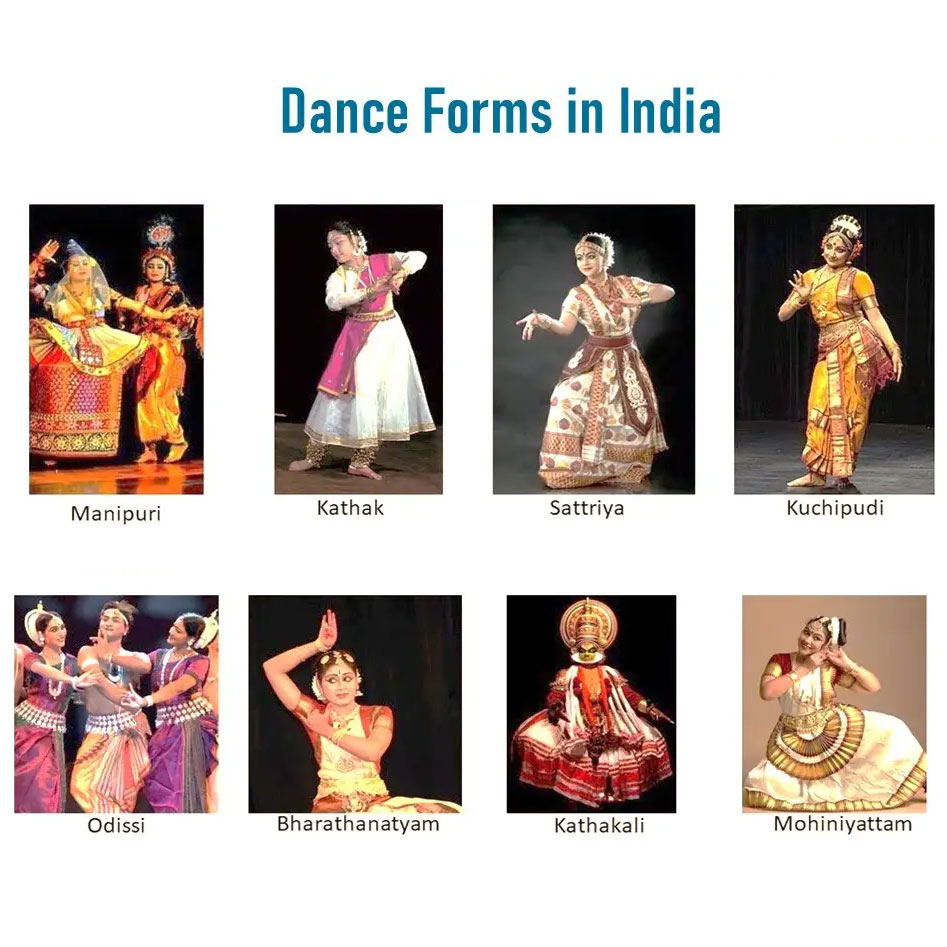
Different Forms of Indian Classical Dance

Ghungroos are small bells made of brass with small iron balls inside. These bells are either strung together by cords or woven into a belt and they produce sounds of varying pitches depending on the metallic composition and its size. A dancer can wear anything between 50 to 200 bells knotted together.

Ghungroo holds a vital and important place in Indian Classical Dance. It acts not only as an instrument producing sound but also as an ornament, worn around both ankles.

When a dancer taps her feet it creates a sound, thus serving to accentuate the rhythmic aspect of the dance. When the rhythmic patterns get complex, the footwork becomes equally complex and the sound produced by the ghungroo gives it a precision and an aesthetic quality.

India is the only country on this planet that can boast of having 8 classical dance forms! Each form is a perfect gem in itself.

Historically Sanskrit, one of the oldest languages in the world, had an outstanding influence on the intellectual and artistic lives of the people across India. It was in the medieval period that regional languages developed and with-it regional dance forms and other arts too developed.

They are:

A) Kathak – from Uttar Pradesh in the North.

From the Eastern Parts:

B) Sattriya – from Assam

C) Manipuri – from Manipur

D) Odissi – from Odisha

E) Kuchipudi – from Andhra Pradesh

F) Bharatanatyam – from Tamil Nadu

From the Western Coast:

G) Kathakali and Mohiniattam – from Kerala

These forms mostly adhere to the tenets laid down in the monumental text on performing arts called Natya Shastra, written over 2,500 years ago by Sage Bharata.

Leave a Comment

Your email address will not be published. Required fields are marked *